Many of you may be aware that one way to have a huge impact on the environment is to reduce or remove meat, dairy and all animal products from your diet/life. Now for me this feels like a long term goal. At the moment I know I would struggle with such an extreme change, especially as my husband actually asked me on one of our first dates if I was vegetarian as he is a major meat eater. But I am certainly not ruling it out and in a bid to find out more I asked a friend to write my first guest blog. Better to hear it from the horses mouth (pun intended).

Guest Blog: Why I’m Vegan.
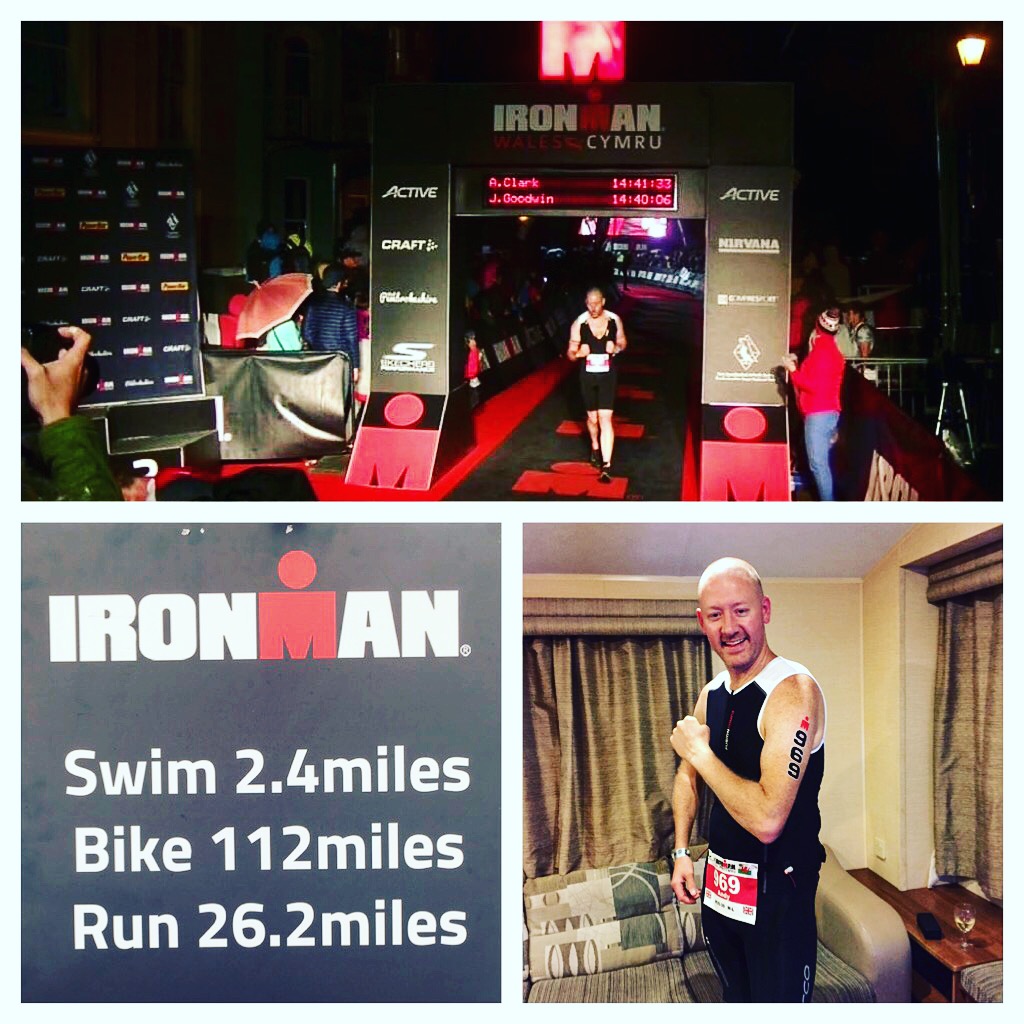
Hi, I’m Andy Clark, 36 years old, married with 2 daughters, Ultra Marathon Runner, Ironman & I’m a Vegan. Here is why:
I’d eaten meat all my life and enjoyed eating it too. My wife has been vegetarian all her life so since living together it was always easier cooking vegetarian meals. I’ve always been a bit of a thinker and looked at things with a critical eye but when we had our first child almost 8 years ago that’s when my view of the world changed massively. I started looking at life differently and had this realisation of what is and isn’t important and a desire to better myself as a human and set an example to my newly born daughter and be a father she’d be proud of. I was, by this point, almost vegetarian through convenience living with my wife but started doing research and chatting to a great childhood friend of mine who was vegan (Carly). Watching documentaries like Earthlings and Cowspiracy, together with some great discussions with Carly and endless hours of research I came to the realisation that being vegetarian wasn’t enough and, although a step in the right direction was rather pointless and massively hypocritical.
Within a few years of being almost fully vegetarian I decided I had to drop dairy and eggs from my diet. At first I found it tough as I missed cheese and struggled to find cheese replacements and after 6 months of trying I quit and went back to vegetarian. That lasted a few months before my moral compass pointed me back to wanting to become vegan. This time I decided I would just accept a life without cheese and I actually found it really easy and without looking have actually stumbled across some tasty alternatives. I still occasionally ate fish but had totally dropped all other meat, dairy and eggs from my diet. I’ve always been active too and was finding my fitness and endurance levels going from strength to strength and my recovery times shortening dramatically and also dropping into the lower spectrum of my ideal weight! This was when I realised I could do it! I’ve now been fully vegan for almost 3 years and not consumed any animal products knowingly in that time. I now have 2 daughters and I can’t think of any greater gift than to live my life with regard for all life and with consideration for the future of our planet. I’m a firm believer that we all have an obligation to leave this World in a better state than when we entered it. I’ve met some great people along the way too and within the last few years have completed a 69 mile and 106 mile ultramarathon, a 50 mile mountain ultramarathon, countless other trail & mountain marathons and ironman Wales which I love mentioning to people who ask, “where do you get your protein/energy.” I can’t ever see myself eating animal products again and slowly my family and friends are getting on board with me being vegan.
There have been some challenging moments along the way and I’m still continually being hounded by people who I feel have a need to justify themselves to me why they eat meat through some form of cognitive dissonance and friends/family who still think it’s a “bit weird” or “just a fad.” I’ve also lost some respect for some people I’m close to. I originally found it tough ordering food when out of the house and felt like I was being a pain in the backside to the person serving me but now I see it as their obligation to understand the needs of customers and I don’t mind making them feel awkward.

Over time I’ve compiled a list of answers to questions and queries I constantly get as I find it useful to share with people so they get a full understanding. Here they are:
1a. If we all went vegan/vegetarian we’d be overrun with animals?
Farmed animals are not allowed to reproduce naturally and farmers only breed animals when they can make a profit out of doing so. As demand for meat goes down over time, fewer and fewer animals will be bred. That means that we will not be overrun by millions of farmed animals, as some people seem to imagine. Eventually, the few that are left can be allowed to go free. Pigs can root around in woodlands as it is natural for them to do, sheep will graze the hillsides like deer and so on. Their populations will find their own natural levels, just like every other animal.
1b. If we all went vegan/vegetarian all the animals would die out.
If we hadn’t selectively bred them to be fat and docile, they wouldn’t have existed in the first place.
The converse of the above question – we veggies hear ‘em all! It’s true that the number of animals will fall as farmers breed fewer and fewer animals as the years go by. Farmed animals live a controlled, distorted life, often filled with pain and fear. The vast majority of farmed animals are kept in indoor units where they never see the light of day. Those that are kept outside are only kept alive for a fraction of their natural lifespans before being slaughtered for meat, often in the most barbaric manner imaginable. All farmed animals are born to die at our command which is a disgusting idea. Also some breeds have been so changed from their natural ancestor that it would be kinder to let them die out. For example, broiler chickens and turkeys bred for meat are often so obese that they can barely walk and suffer from crippling leg disorders. However we could set up large nature reserves for the more traditional (now rare) breeds that haven’t been so changed.
There would be much more land available for reserves because most of it is used to grow crops for fattening animals at present. Also, there would be more space for forests and woods and other wildlife reservations where genuinely wild British species of animal and plants could flourish. In other countries we could encourage the breeding of our farm animal’s wild ancestors – the wild pig, turkeys and jungle fowl (the forerunner of the battery hen) by stopping the destruction of their homes.
Many people forget that all farmed animals have been bred from wild animals – and that their natural ancestors need preserving.
In a vegan world animals would not be kept for profit and greed but would be allowed to exist in their natural state and live their life in freedom.
2. Our teeth/digestive systems are designed for eating meat.
No, they aren’t. We can digest meat, but our digestive systems are different to carnivorous animals: our guts are longer (so we can digest lots of plant materials) and our teeth are not designed to slice and tear flesh. Our teeth and mouths are the wrong shape to be able to kill and hold captive struggling prey (compare our jaw shape and teeth to a lion – or your pet cat or dog!). That’s why humans cook meat before eating it and why we’re no good at crunching and munching uncooked bones. As for our sharp teeth, gorillas are entirely vegetarian – as are almost all primates – and yet have far longer and sharper canine teeth than human beings. The diet of the ancestors of human beings was vegan until they began hunting about one-and-a-half million years ago but even then meat formed just a tiny part of their diet. That’s why people live long, healthy lives on vegetarian and vegan diets but would quickly die if they ate nothing but meat.
3. Eating meat is natural.
You are right! It is completely natural to use artificial selection to breed animals on feedlots, pump them with antibiotics and growth hormones, slaughter them with machinery, send them to processing factories, package them in plastic, ship them all across the country, and then buy them!
As we’ve just seen, it isn’t. Humans have only eaten meat in relatively recent evolutionary history and then only through the use of tools like spears and fire. Only when we started farming (hardly natural!) did meat become even a regular part of most human beings’ diets and eating meat on a daily basis is very recent – since the advent of factory farming after the Second World War. This brought the cost of rearing animals down and the meat eating explosion was the result. In 1946, for example, the number of poultry eaten in Britain was 31.9 million and in 2001 it was over 800 million. And what’s natural about factory farming, live exports and slaughterhouses?
4. Lots of animals kill for food: why shouldn’t we?
Animals do lots of things we don’t do and wouldn’t do! Anyway, we shouldn’t kill because we have a choice. Lions and tigers etc have to kill to survive (they are known as obligate carnivores): we don’t. Animals can only follow their instincts but we human beings can think about the consequences of our actions. We can recognise the suffering of other animals and we can choose not to inflict it on them. If we choose to make them suffer, what does that say about the human race?
Eating meat is causing mass pain and suffering; it is destroying the earth and is costing the health services millions.
5a. It’s alright to eat animals if they’ve had a good life.
Would it be alright to kill and eat people if they’d had a good life? And what do we mean by a ‘good’ life, anyway? In the case of animals, we certainly don’t mean a long one. ‘Meat’ animals are killed as babies in the case of lambs and veal calves or as soon as they become physically mature – the equivalent of human teenagers – and never get to lead any kind of adult life. Animals, of course, want to live just as much as we do. The first instinct every animal has is to survive. By killing them at all, we are taking away from them the most important thing they have; we are denying their intrinsic right to life.
It is also naïve to imagine that any farmed animals lead good lives: the overwhelming majority of them are exploited, neglected and frustrated on factory farms – forced to lead lives of misery by a farming system which sees them only as ways of producing a profit. They then face a violent, frightening death in the slaughterhouse: despite supposedly humane stunning, millions of animals are still conscious when their throats are cut. Even free range and organic animals suffer on farms (see Question 6) and they face the same shocking death at a young age as factory-farmed animals.
5b. Humane slaughter is ok!
You’d make a great defense attorney. I’m sure you could get lots of murder acquittals with that argument!
6. I only eat organic/free range/fish/chicken anyway
Good. Any choice that people make which reduces animal suffering is a welcome choice – but why stop at some kinds of animal or some kinds of suffering? Fish and chicken feel pain and have an instinct to preserve their own lives in just the same way as cows and pigs. They may be less attractive animals to you but that doesn’t mean that their lives and suffering are less important to them.
Similarly, although free range and organic animals usually (although not always) lead better lives than factory farmed animals, they still suffer in many ways. For example, so-called free range egg farms may involve thousands of hens being kept in a shed with limited access to outside and to limited land. Even in the better free range/organic egg farms, all male chicks are killed within hours – useless by-products as they do not lay eggs and are too scrawny for meat. Even if kept in spacious conditions, free-range hens have it rough. Like their battery cage counterparts, they’ve been bred to lay eggs at especially high rates, which in turn exposes them to all manner of health problems. And nearly all hens, both caged and free-range alike, are slaughtered before reaching the midpoint of their natural lives. That’s because egg yields decline as the hens age, and the cost of purchasing new hens is trivial when set against the increased egg output of younger birds.
All animals kept for farming are prevented from mixing in normal social groups, and ducks never see their ducklings; hens their chicks; pigs have their piglets taken away much too young; dairy cows have their calves ripped from them at one day old. Even on free range farms the male calves are shot as they don’t give milk and are the wrong breed for beef. All farms prevent animals from living natural lives. And all are sent for slaughter as soon as there is more profit in killing them than in keeping them alive.
There is no need to farm or to slaughter any animal. Eating any kind of meat contributes to animal suffering – and to the environmental and world hunger problems caused by the meat industry. The less meat people eat the better and many people find that cutting out meat gradually works best for them – but ultimately, the only truly consistent and ethical choice is to eat no meat at all.
7a. Plants scream when they’re pulled out of the ground or are cut up for food.
This question is usually seen as a bit of a joke, but if you want a serious answer here goes!
Plants do not feel pain. They do not have pain receptors, nerves or a central nervous system. The ‘screaming’ that sensitive equipment has detected when plants are damaged is thought to be caused by movement of gasses. The cut releases the pressure allowing gases inside the plant to move towards the cut, making a noise as they do so. And even if plants did feel pain, the average meat eater is responsible for ten times more plants being killed than the average vegetarian (see Question 10) – because all the animals that meat-eaters consume, eat huge amounts of plants themselves.
7b. Farming plants kills animals too!
Okay. If you promise to watch a video of a slaughterhouse, I promise to watch a video of a strawberry harvest. (Also see question 7a)
8. If you were stuck on a desert island, you’d have to eat meat.
Maybe – but if you were stuck on a desert island you might have to run around naked, never take a shower and wipe your arse with leaves: that doesn’t mean that you should do those things the rest of the time. However, firstly I would find out what the animals living on the island were eating and eat that too.
Let me ask you a question instead: if you lived on a planet where there was an abundance of healthy, cheap food available, and a tiny proportion of that food caused immense suffering to others and was largely responsible for the destruction of your habitat, would you continue to eat it? Because that’s the actual situation you face right now.
9. God put animals on earth for us to eat
Most of us in the UK do not follow religious rules in our lives – but even amongst people with strong religious faith, there is considerable disagreement about whether god wants us to eat animals. No major religions command their followers to eat meat and many devout Christians, Muslims, Buddhists and Jews are vegetarian as are all Hare Krishnas and Jains. Most Hindus, of course, eat no red meat. For most religious people the question remains one of individual judgement. Most religions, however, celebrate compassion, kindness and mercy. The abattoir and the factory farm do not seem consistent with that.
10. If we all ate vegetables and crops, wouldn’t we need more pesticides?
No. Setting aside the question of whether pesticides are needed at all, if everyone were vegan we would use less pesticides because we would actually grow less crops. Meat/dairy animals all eat plants and they convert them into food very inefficiently. On average, a farmed animal has to eat 10kg of plant protein in order to make 1kg of meat – in other words, if the same land was used to grow crops for people to eat, it would be ten times more productive. To put it yet another way, 90% of the crops we feed to animals are wasted. If we didn’t eat animals, we wouldn’t need to grow those crops or use chemicals on them.
11. Eating fish doesn’t cause suffering.
Yes it does. Numerous scientific studies have confirmed that fish do feel pain. Industrial fishing causes them immense suffering because they are killed either by being crushed in the net, having their swim bladders explode when they are brought to the surface or by asphyxiating (being starved of oxygen) on the decks of trawlers. Many fish, especially salmon, are also now intensively farmed and suffer from infectious illnesses, parasites and overcrowding.
12. What would happen to the countryside if we stopped having animals grazing on it?
As we’ve already seen, we would need to use less of our countryside for agriculture if we were all vegetarian: that means that more of it could return to a natural state. Britain has less woodland than any other northern European country – we could change that if we didn’t need to use land to grow crops like soya for animal feed.
Far from being a loss to the countryside as some people imagine, ending livestock farming would mean a huge toll of suffering would be eliminated and wildlife allowed to recover (see 1b).
13. Why not do something for people instead of animals?
Vegetarianism does help people. The meat industry causes environmental degradation through things like deforestation, soil erosion, water pollution and the production of greenhouse gases – we would live in a cleaner, better world if we were all vegetarian. Secondly, because meat production is such an inefficient way of producing food it consumes resources which should go to human beings. In the developing world, land is increasingly being devoted to the production of animal fodder for export to the rich world instead of being used to grow food for the local population. Finally, vegetarianism improves human health, which brings rewards for individuals and also to society as a whole which needs to spend less on health care and lost working days through ill health.
Compassion towards animals is not in competition with compassion towards people. Vegetarianism is a choice each individual can make which improves the lives of animals and human beings. It is also a choice about what people eat – not where they work, what they do in their spare time or how they vote. Many vegetarians dedicate their lives to human welfare – Gandhi is the classic example of that.
14. Hitler was vegetarian.
Do you drink water? So did Hitler!
Anyways, back to Hitler being a vegetarian, no he wasn’t. He ate meat – just like Himmler, Goering, Adolf Eichmann, Joseph Stalin, Pol Pot, Attila the Hun, Idi Amin, Saddam Hussein, Harold Shipman, Timothy McVeigh, Myra Hindley and almost every other killer in history. So even if he had been vegetarian, it would prove nothing. But he wasn’t.
15. All the farmers would be unemployed if we stopped eating meat.
People will still need to eat when we are all vegan so there will still be plenty of jobs for farmers! (In fact the intensive farming of animals has caused severe unemployment in agriculture as so few people are employed to look after so many animals. A vegan world would mean more employed in sustainable methods of farming.)
However, even if farmers did become unemployed that is no reason to keep farming animals for food. Eating meat is harmful to animals, to the planet and to ourselves – if it is right to stop it, the employment prospects of those who work in the meat industry are no reason to keep it going. As has been pointed out, if we got rid of all crime, the police would be out of work and if we got rid of all illness, doctors and nurses would be out of work: that doesn’t mean we shouldn’t try to get rid of crime and illness.
16. I don’t mind you being vegan/vegetarian – but you shouldn’t try to impose your views on other people. It’s a matter of individual choice.
Trying to persuade people to change their minds is not “imposing your views” upon them. It is the kind of healthy disagreement which democracy depends on and which is essential for change to take place.
What we eat is also not simply a matter for individuals. Meat-eating and vegetarianism are not two sides of the same coin: one brings death and suffering to animals, damages the planet and harms human health and the other doesn’t. The reason that vegetarians try to change the minds of non-vegetarians is because their “individual choice” affects countless other beings, human and non-human.
17. What difference will one person giving up meat & dairy make?
A huge difference. The average British meat eater consumes, in the course of their lifetime, 5 cattle, 20 pigs, 29 sheep and lambs, 780 chickens, 46 turkeys, 18 ducks, 7 rabbits, 1, geese and half-a-tonne of fish. That is a lot of lives saved. Just as importantly, the best advertisement for veganism is a healthy and happy vegan: if you turn vegan you will be able to influence others to become part of the movement towards a more compassionate and rational world.
18. We’ve eaten meat since we were cavemen.
We’ve lied, stolen, killed one another and made war since we were cavemen too. That doesn’t make those things right. (See questions 2 and 3.)
19. Why do vegans always look ill?
Yeah, I’ve never known a sick meat eater before. It must be a vegan thing!
The answer is they don’t. That’s like asking why toupees always look bad – it’s just that you only notice the bad ones. If you know someone (who knows someone….) who was ill they do not represent the normal vegan. Carl Lewis, winner of 6 Gold Medals seems fine to me! Vegan athletes
20. If the animals weren’t happy and healthy, they wouldn’t grow/lay eggs etc
Just not true. People don’t grow big because they’re happy and neither do animals. Meat chickens today grow almost twice as fast as they did 50 years ago – yet they live in far worse conditions, crammed into stinking, windowless broiler sheds by the tens of thousands and suffering from lameness and other problems. They don’t grow big because they’re happy but because they have been selectively bred to gain weight quickly, are given growth-promoting drugs and are fed on special diets.
Similarly, dairy cows have been bred to produce far more milk than is natural to them. In fact, the dairy industry relies upon making animals unhappy – by taking their calves away so that humans can drink their mothers’ milk – in order to function. Laying hens have been bred to produce so many eggs that they lose calcium into the shells and suffer from brittle bones and fractures as a result. They don’t lay eggs because they’re happy: they have no choice!
21. Isn’t it boring to eat salad and tofu all the time?
You are right. I do get pretty bored of eating seitan ravioli in wild mushroom sauce with cashew cream, and I think I will go crazy if I have to eat black bean chilaquiles with pepitas for breakfast again. It is much more exciting to eat grilled chicken and scrambled eggs all the time!
22. Why is honey not suitable for vegans?
Bees produce honey for themselves, not for humans. They are often harmed in the honey gathering process. There are plenty of ways to protect insect populations, support crop pollination, conserve the environment and sweeten our food without farming bees or buying honey, propolis, beeswax or royal jelly. To replace honey in your diet try golden or maple syrup, date syrup, agave nectar or even dried fruits.
23. Where do you get protein!?!?
Despite what you’ve heard most vegans don’t find this a problem. Not so long ago, conventional wisdom had it that vegans and vegetarians risked dangerous protein deficiencies. But over time this myth has largely died out, doubtless due to the fact that have been virtually no instances of vegans falling victim to acute protein deficiency. Grains, beans, nuts, and vegetables all have surprisingly large amounts of protein. So vegans who get enough calories and eat a decent variety of foods are unlikely to be protein deficient. While outright cases of protein deficiency are extremely rare, it’s certainly possible to be on the low end of the spectrum for protein, especially if you don’t take in many calories and if fruit or refined sugars make up a high percentage of your diet. If that’s the case, you’ll want to be sure to include more protein-rich vegan foods in your diet. Some extraordinarily good vegan protein sources include:
• beans
• lentils
• spinach
• kale
• broccoli
• mushrooms
• peanut butter
• nuts
• tofu
• peas
• quinoa
• tempeh
• soymilk
Some people are obsessed with protein. Vegans are bombarded with questions about where they get their protein. Athletes used to eat thick steaks before competition because they thought it would improve their performance. Protein supplements are sold at health food stores. This concern about protein is misplaced. Although protein is certainly an essential nutrient which plays many key roles in the way our bodies function, we do not need huge quantities of it. Only about one calorie out of every 10 we take in needs to come from protein. Vegan athletes, especially in the early stages of training, may have higher protein needs than vegans who exercise moderately or who are not active. Vegan athletes’ protein needs can range from 0.36 to 0.86 grams of protein per pound. Protein supplements are not needed to achieve even the highest level of protein intake.
How much protein do we need? The RDA recommends that we take in 0.8 grams of protein for every kilogram that we weigh (or about 0.36 grams of protein per pound that we weigh) This recommendation includes a generous safety factor for most people. When we make a few adjustments to account for some plant proteins being digested somewhat differently from animal proteins and for the amino acid mix in some plant proteins, we arrive at a level of 0.9 gram of protein per kilogram body weight (0.41 grams per pound). If we do a few calculations we see that the protein recommendation for vegans amounts to close to 10% of calories coming from protein. [For example, a vegan male weighing 174 pounds could have a calorie requirement of 2,600 calories. His protein needs are calculated as 174 pounds x 0.41 g/pound = 71 grams of protein. 71 grams of protein x 4 calories/gram of protein = 284 calories from protein. 284 divided by 2,600 calories = 10.9% of calories from protein.] If we look at what vegans are eating, we find that, typically, between 10-12% of calories come from protein. This contrasts with the protein intake of non-vegetarians, which is close to 14-18% of calories.
So while it’s certainly possible for a vegan (or anybody for that matter) to come up short on protein, it’s a relatively rare occurrence.
B12 is a substance produced by cyanobacteria in the soil, and the notion that you can only get it from animal products like meat and cheese is FALSE. Anyone can become B12 deficient even meat eaters. Animals are also routinely injected with b12 or have it put in to their food.
If any of you would like to follow Andy then look him up on Instagram: andycgeordie.
Now I know some of that information will be a bitter pill to swallow and for some reason it really is a topic that polarizes people, almost as much as religion and politics but take it for what it is, an explanation why one person has chosen a different way. You are not a bad person if you do not want to become vegan, it is just food for thought. Personally I am going to start by trying one vegan meal per week. I am also going to try more vegetarian or vegan food when eating out. Another option is what I have recently seen termed as a flexitarian:
a person whose diet is mostly vegetarian but sometimes includes meat, fish, or poultry.
Please feel free to leave comments and questions for Andy but good vibes only people.




 The cost is £3.35 for 9 rolls so the cheapest of the options I have tried and no delivery cost if you are buying as part of your normal shop. It is made from recycled paper and the country of origin is Portugal, they don’t really provide much more information than that but there is some information on the rear that directs consumers to recycle the outer plastic packaging along with their plastic carrier bags at your larger Tesco store. Great idea but for me personally recycling plastic is not a solution, no plastic packaging in the first place should be the ultimate goal. I noticed no difference with this to any other Tesco branded toilet roll so it definitely does the jobs and it is convenient.